
TK - First Grade
Developmental Characteristics
Physical
Enjoy long periods of free play
Developing eye-hand coordination
Enjoy small group cooperative play
May require rest after high-energy play
Improved body coordination; yet still can fall easily

Social Emotional
Eager to receive adult praise
Enjoy dramatic play
Eager to engage in new activities/adventures led by involved adult
Eager to identify with older children
Enjoy exploring new materials and equipment
Can be easily frightened by novel or strange events
Prefer play in small groups
Like responsibilities they can handle
Learning to cooperate with others, but may at times display selfish behavior

Cognitive
Understand language better than they speak
Are interested in present; vague concepts of past/future
Eager to learn
Ask many questions
Define things by their use
Developing a sense of humor
Communicate best within a small group of peers
May need guidance of adult when starting a new task

Week 6: Point of View
Students play This or That by choosing between picture pairs displayed on the board, then listen to general descriptions of everyday items (a pizza, a pet, a family, a toy, a dessert) and draw their own interpretation of each — sharing their drawings with the class to discover how everyone pictured the same words differently.

Week 5: Bodies are cool (TK-2)
Students play Head, Shoulders, Knees, and Toes with 2-3 volunteers leading the class at different speeds, then listen to a read-aloud of Bodies Are Cool by Tyler Feder, draw 1-2 bodies from the book with an explanation of why they're cool, and finish with Strike a Pose — each student gets a 5-second runway walk or dance move in front of the class to a class-chosen song.
Week 4: Boundaries & Respect (TK-2)
Students play Listen and Learn in pairs — counting 1, 2, 3 back and forth while progressively replacing numbers with claps, stomps, and snaps across 5 rounds — then watch and sing along to "The Boundaries Song" before listening to a read-aloud of Don't Hug Doug (He Doesn't Like It) and discussing what boundaries are and why they matter.

Week 3: Displaying emotions (TK-2)
Students sing a modified "If You're Happy and You Know It" with verses for happy, mad, sad, and excited — acting out each emotion with their face and body — then play Emotions Bingo (1-3 rounds) using the feelings chart to identify emotions called out.

Week 2: Identifying emotions (TK-2)
Students dance to music and freeze while striking the called-out emotion (happy, mad, sad, worried, calm) for 5 rounds, then play Emotions Charades where each student gets 30 seconds to act out a teacher-assigned emotion from the feelings chart while classmates guess.
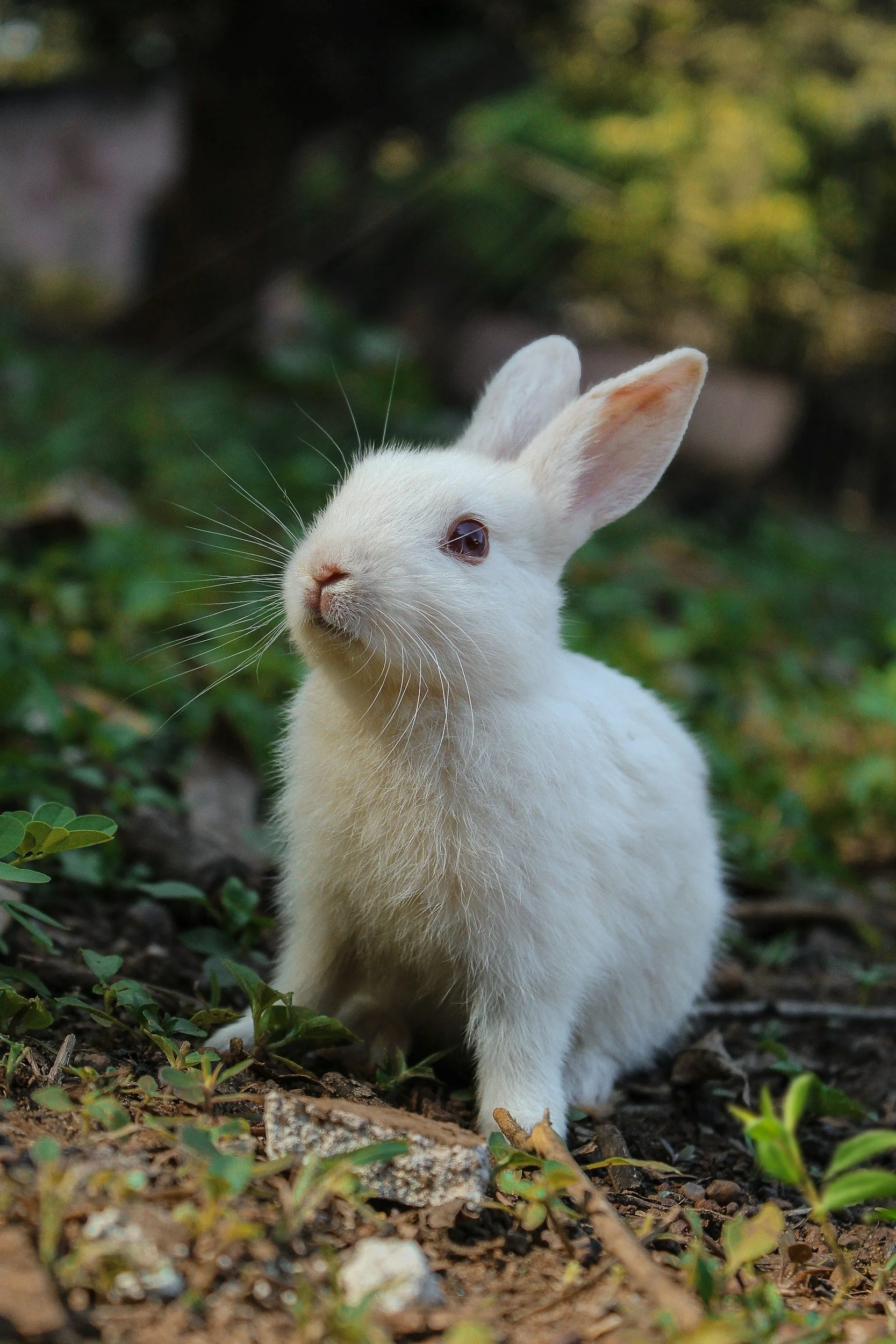
The Rabbit Listened (TK-2)
Students take turns adding one block at a time to build a class structure for the class stuffy, then listen to a read-aloud of The Rabbit Listened by Cori Doerrfeld, and finish by making paper Magic Listening Ears (bunny ears) out of construction paper or a paper plate.
Week 2: Uplifting Others (TK-2)
Students build a Friendship Web by tossing yarn across a circle while saying something positive about the person they throw it to, then watch a Charlotte's Web storytime video, color and cut out a farm animal to glue on a popsicle stick, and use their puppet to practice walking up to peers and asking them to play.

Week 1: Positive Self Talk (TK-2)
Students play Counting to 10 — working together as a class to count without overlapping or repeating numbers — then listen to a read-aloud of I Like Myself by Karen Beaumont, practice a guided mindful breathing minute, and complete an affirmation worksheet with a self-portrait to share with the class.

Week 6: Reflection and celebration (TK-2)
Students play SEL-Style Musical Chairs — walking around chairs to music, but instead of eliminating anyone, everyone works together to find a spot when the music stops — then rotate through the SEL Scenario Celebration, where the teacher reads real-life scenarios (a friend crying, wanting to yell, fighting over a toy) and students respond or act out the best SEL solution.

Week 5: Conflict Resolution (TK-2)
Students watch a movement brain break video about solving problems, then play the Scenario Challenge — the teacher dramatically acts out wrong choices (grabbing, interrupting, yelling) while students call out "NOT A GOOD CHOICE!" and shout Fix-It responses like using words, taking a breath, or walking away.

Week 4: Decision making steps (TK-2)
Students play Zoo — competing to pick a different animal body pose than the leader on the count of three — then practice the Stop, Think, Choose strategy through a movement game (TK–K) where they freeze, point to their head, and move on cue between different locomotor actions, or act out scenarios applying the three steps (1st–2nd).
Week 3: Team Problem-Solving Games (TK-2)
Students play Team Freeze Challenge — moving around the room and stopping like statues on "Freeze!" to solve a quick group challenge together — then play the Human Shape Challenge, using only their bodies to form shapes or objects called out by the teacher, working in partners, small groups, or as a whole class.

Week 2: Tattling vs Reporting (TK-2)
Students watch and discuss a live skit where a student immediately tattles on the teacher for accidentally taking the wrong backpack, then play the Tattling vs. Reporting Scenario Game — moving to a red (tattling) or green (reporting) side of the room for each scenario and brainstorming how to solve the tattling situations independently.

Week 1: What is a problem? (TK-2)
Students take turns playing an online memory matching game as a class (practicing patience and silent helping), then color Bluey character puppets while watching a Bluey clip paused at key moments to discuss the problem and feelings, before a group of students reenacts the scene using their finished puppets.

Week 4: Big vs Small Problems (TK-2)
Students play the Big or Small Sorting Game — physically moving to one side of the room labeled "Big Problem" or the other labeled "Small Problem" after each scenario is read — then act out calm reactions to small problems (taking a breath, saying "it's okay," picking things up) reinforcing that a small problem deserves a small reaction.
Week 3: Breathing Strategies (TK-1)
Students practice several breathing techniques together — the crocodile, smell the rose/blow the candle, heart hands, and the Balloon — with volunteers leading the class in their favorite, then cut out and glue 3–5 calm-down strategies onto a personal Calm-Down Toolbox worksheet to decorate and take home.

Week 2: Freeze Games (TK-2)
Students play Freeze Dance — dancing freely to music and freezing their bodies completely still each time the music stops — then play a Movement Game where the teacher calls out a specific movement to do while the music plays, stopping and holding their pose each time the music cuts out.
Week 1: What is Self-Control? (TK-2)
Students play Self-Control Charades — taking turns acting out scenarios with their face and body while classmates identify whether it calls for a calm or silly body — then draw themselves having a calm moment at school on a worksheet, thinking about their hands, feet, face, and posture.
Week 7: Community Empathy (TK-2)
Students play Kindness Freeze Dance — dancing freely until the music stops, finding a partner, and performing a called-out kindness action (high five, handshake, smile, or compliment) before the music restarts — then design and decorate a Kindness Coupon promising one specific kind act they'll do for a friend or family member.

Recognizing Empathy (TK-2)
Students toss a ball around the circle, each giving a personalized compliment to the classmate they throw to, then practice the Feelings Signal Game — listening to short scenarios and identifying how the person in each scenario might feel through discussion, acting out, or feelings cards.