
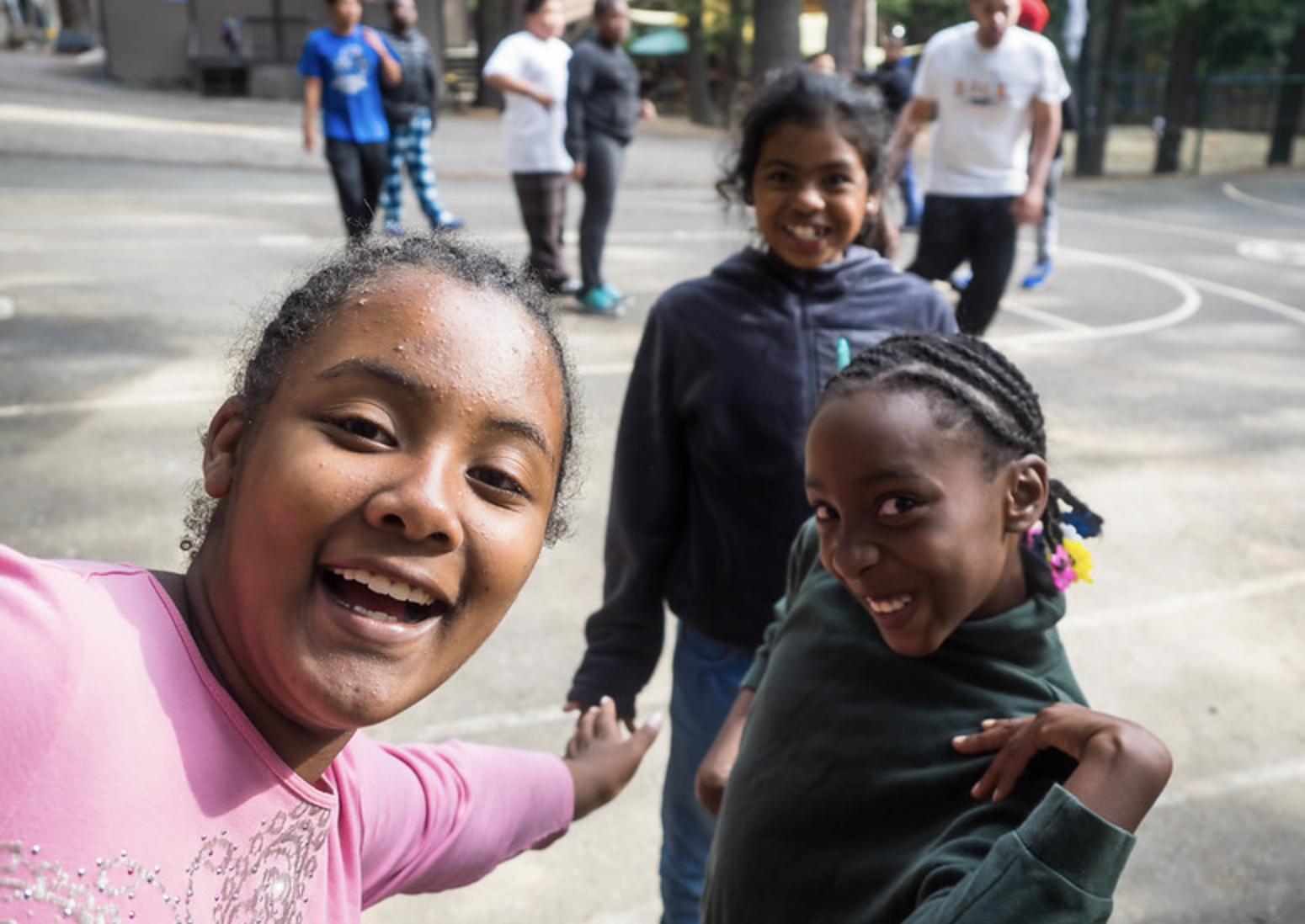
Fourth - Fifth Grade
Developmental Characteristics
Physical
May be careless about their clothes, room and body cleanliness
Girls may have sudden growth spurt and beginning signs of puberty
Enjoy physical activities that master specific skills
Enjoy competitive games
Possess a high activity level
Enjoy games that allow for comparison of skills
Enjoy games that allow for self-improvement
Social Emotional
Enjoy small, peer-dominated group discussions
Like to join organized groups
Are anxious to grow up
Are intensely loyal to their peer group
Form a close one-on-one friendship
Have a growing desire to assert individuality and independence
Can be daring and competitive
Can be critical of peers and adults
Are self-conscious of their abilities
Cognitive
Ask many questions and what thoughtful answers
Can often understand other points of view
Developing strong interests, hobbies, and collections
Enjoy daydreaming
Enjoy problem solving games and puzzles, etc.
Enjoy rule-based games
Are beginning to develop view about social/global issues
Beginning to enjoy humor by telling jokes and understanding sarcasm




Week 2: Tattling vs Reporting (3-5)
Students improv scenarios where they must come up with a solution on their own before involving an adult — acting out responses like taking a deep breath, asking politely, or using words — then play the Tattling vs. Reporting Scenario Game, moving to a red (tattling) or green (reporting) side of the room for each scenario and discussing how to handle the tattling situations independently.

Week 1: What is a problem? (3-5)
Students play the Problem Traffic Light — moving fast for green (small) problems, slowly for yellow (medium) problems, and freezing for red (big/emergency) problems as scenarios are called out — then play Problem War, flipping scenario cards head-to-head and competing to identify who has the bigger problem while the class confirms each answer.

Week 4: Big vs Small Problems (3-5)
Students play the Big or Small Sorting Game — physically moving to one side of the room labeled "Big Problem" or the other labeled "Small Problem" after each scenario is read — then act out calm reactions to small problems (taking a breath, saying "it's okay," picking things up) reinforcing that a small problem deserves a small reaction.

Week 3: Breathing Strategies (2-5)
Students practice several breathing techniques together — the crocodile, smell the rose/blow the candle, heart hands, and the Balloon — with volunteers leading the class in their favorite, then cut out and glue 3–5 calm-down strategies onto a personal Calm-Down Toolbox worksheet to decorate and take home.

Week 2: Freeze Games (3-5)
Students play Freeze Dance — dancing freely to music and freezing their bodies completely still each time the music stops — then play a Movement Game where the teacher calls out a specific movement to do while the music plays, stopping and holding their pose each time the music cuts out.

Week 1: What is Self-Control? (3-5)
Students play Self-Control Charades — acting out school-based scenarios with their body while classmates identify the emotion, the impulse felt, and the self-control strategy being used — then draw themselves having a calm moment at school on a worksheet, considering their hands, feet, face, and posture.

Week 7: Community Empathy (3-5)
Students play Kindness Freeze Dance — dancing freely until the music stops, finding a partner, and performing a called-out kindness action (high five, handshake, smile, or compliment) before the music restarts — then design and decorate a Kindness Coupon promising one specific kind act they'll do for a friend or family member.

Week 6: Recognizing Empathy (3-5)
Students play Step Forward If — standing in two lines facing each other and stepping forward to high-five when a statement applies to them — then practice the Feelings Signal Game, listening to short scenarios and identifying the emotions involved through class discussion, group talk, acting out, or feelings cards.

Week 4: Caring Actions (3-5)
In small groups, students discuss and act out solutions to scenarios where someone needs help (a forgotten backpack, a sad friend at lunch, a struggling classmate), then complete a Helping Hands worksheet writing or drawing one way they can help a friend and one way they'd like help at school.
Week 5: Kind Words (3-5)
Students play Kind Words Echo — repeating compliments back in calm, loud, and silly voices — then write or draw a compliment for a classmate or family member on a Compliment Card to give away.
Week 3: Walking in Someone’s Shoes (2nd-5th)
Students play Shoe Shuffle — removing one shoe, mixing them in the center, then guessing whose shoe they picked up and discussing similarities and differences with that person — then decorate a shoe outline with personal clues (favorite color, something they like, and what makes them feel happy or calm).

Week 2: Feelings Charades (2nd-5th)
Students play Emotion Freeze Dance — dancing freely until the music stops, then freezing in a full-body pose matching the feeling called out — then color a Feelings Wheel, choosing their own color for each emotion section (happy, sad, mad, scared, tired, silly).
Week 1: What is Empathy? (2nd-5th)
Students play Feelings Face Shuffle — making the facial expression that matches each emotion called out (happy, sad, surprised, scared, etc.) — then look at 4–6 pictures of children and discuss what feeling each child is showing and what might help them.
Week 7: Confidence Through Kindness (1st-5th)
Students pass a ball around the circle, each sharing one kind action they can do that day while classmates cheer, then decorate a paper crown with drawings and words representing their own kind actions before wearing their finished Kindness Crown.

Week 6: Celebrating Growth (1st-5th)
Students take turns walking around the circle in a Confidence Parade — striking a proud pose while classmates clap and cheer — then decorate a personal Confidence Certificate with their name and an affirmation about something they've accomplished to take home.
Week 5: We Can Do It! (1st-5th)
Students play the Partner High-Five Challenge — practicing a clap-then-high-five rhythm with a partner, adding speed and pattern variations before switching partners — then collaborate on a large butcher paper mural drawing scenes of friends helping each other, each signing their name on the finished "We Can Do It!" mural.
Week 4: Positive Self-Talk (1st-5th)
Students play the Mirror Game in pairs — mirroring each other's slow movements, then pairing affirmations with matching poses ("I am brave!" with arms raised strong) — then fill a heart worksheet with drawings and words about what they love about themselves.

Week 3: Sharing with Pride (1st-5th)
Students dance freely during the Confidence Pose Parade (freezing in their strongest confident pose when the music stops), then play Bravery Freeze Dance — freezing in response to confidence challenges like "Freeze like a superhero!" — before taking turns leading the class in their own brave pose for everyone to copy.

Week 2: Growth Mindset (1st-5th)
Students draw and decorate a "Brave Brain" worksheet with things that help them keep trying (friends, practice, courage), then act out how to fix playful "oops" moments (spilled crayons, drew on the wrong paper) one at a time while the class cheers "We can fix it!"

Week 1: Celebrating Strengths (1st-5th)
Students strike "Confidence Poses" responding to fun prompts (brave superhero, proud artist, kind friend), then draw and decorate a "Confidence Juice Box" worksheet — filling it with the people, activities, and moments that make them feel strong and brave — and share one "ingredient" with the class at the end.